Is your automatic gate acting up? Here are the warning signs that mean it is time for repair or full replacement in Humble, TX — and what to do next.
Most homeowners do not think much about their automatic gate until something goes wrong. The gate opens every morning, closes every evening, and quietly does its job. Then one day it does not — and suddenly you are sitting in your car in the rain, pressing the remote over and over, wondering what just happened.
If you have lived with an automatic gate for a few years, you have probably noticed small things start to slip. Slower opening. A weird grinding sound. The remote needs three tries instead of one. These are not random annoyances. They are early warnings, and catching them at this stage saves you a lot of money and frustration later.
JB Fences has been working on residential and commercial gates across the Houston area for years, and we have seen the same patterns play out again and again. This article walks through the warning signs you should not ignore, and helps you figure out whether you need a repair, a part replacement, or a full new installation.
How Long Should an Automatic Gate Actually Last?
Before we get into warning signs, let’s set some baseline expectations. A well-built automatic gate system has several parts, and they do not all wear out at the same rate.
Here is a rough breakdown of how long the main components typically last:
| Component | Average Lifespan | Common Issues at End of Life |
| Gate frame (steel/iron) | 20–30 years | Rust, sagging, weld failures |
| Gate operator/motor | 10–15 years | Stripped gears, electrical failure |
| Control board | 8–12 years | Power surge damage, water exposure |
| Remote receivers | 5–10 years | Range loss, signal interference |
| Hinges and rollers | 5–8 years | Wear, alignment issues |
| Batteries (backup) | 3–5 years | Capacity loss |
The Door and Access Systems Manufacturers Association reports that more than 70 percent of automatic gate failures come from neglected maintenance rather than actual product defects. Most gate problems are repairable if caught early. They become replacement situations only when small issues get ignored for too long.
Warning Signs That Mean You Need Repair
Some signs are obvious. The gate does not move. The motor makes a loud bang when you press the remote. These need immediate attention. But the more useful warnings are the subtle ones — the early indicators that something is starting to fail.
Slower Opening or Closing
If your gate used to open in eight seconds and now takes fifteen, something is wrong. This could be a failing motor, worn rollers, debris in the track, or a power supply issue. Slow operation puts extra strain on the motor, which speeds up the rate at which the whole system fails.
Unusual Sounds
Grinding, squealing, clicking, or banging sounds are all signs that mechanical parts are not working properly. A healthy automatic gate runs with a steady, low-volume hum. Anything louder or sharper than that means a part is wearing down or misaligned.
A common culprit is dry hinges on swing gates. Lubrication every six months prevents this. On sliding gates, the noise often comes from the track — either debris, wear on the rollers, or both.
The Gate Reverses for No Reason
If your gate starts to close and then suddenly reverses without anything in its path, the safety sensors are probably misaligned or dirty. Photo eye sensors need to face each other directly and stay clean. Spider webs, mud, or even leaves can break the beam and trigger the auto-reverse function.
Sometimes the issue is the pressure-sensitive edge on the gate itself, which can become overly sensitive as it ages. This is a repair job, not a replacement situation, but it needs attention.
The Remote Stops Working Consistently
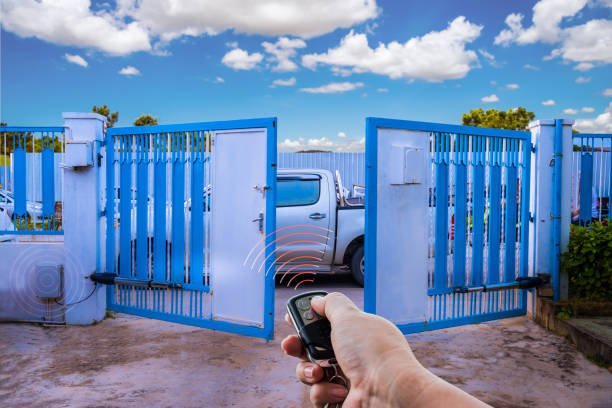
If you have changed the remote batteries and the issue persists, the receiver in the gate operator is probably failing. Sometimes the issue is interference from a new device in the house — Wi-Fi routers, baby monitors, and even LED light bulbs can interfere with older remote frequencies.
Modern rolling-code remote systems are much more reliable than older fixed-code systems. If your gate is more than 15 years old and you have constant remote issues, upgrading the receiver is often a cheap fix that brings the system fully back to life.
Visible Rust or Sagging
This is more about the gate itself than the operator. Iron and steel gates in Humble’s humid climate are prone to rust at the welds and hinges. A small amount of surface rust is normal and can be cleaned and repainted. Structural rust at the welds is a different problem — once the metal is compromised, the gate can fail suddenly.
Sagging is another warning. If your gate no longer sits level when closed, the posts may have shifted in the ground, the hinges may have worn down, or the gate frame itself may be warping. Repair is possible in early stages. Once the sag is significant, replacement is usually the better option.
When Repair Is Not Enough
There comes a point where repair stops making sense. If you have replaced the motor twice in five years, you are working on an undersized or low-quality operator and a new one is overdue. If the gate itself has multiple structural welds breaking, patching it up creates a weak system that will keep failing.
Here is our general rule: if the cost of repair is more than 60 percent of the cost of replacement, replacement is usually the better investment. You get a new warranty, modern features, and the peace of mind of starting fresh.
Modern automatic gate systems also include features that older systems did not have. Phone app integration. Battery backups. Quieter motors. Better safety sensors. Solar power options. If your current gate is older than 15 years, you might be surprised at how much better the technology is now.
For homeowners in the Houston area, Expert Automatic gate installation near me in Humble, TX is something our team handles regularly, and we always start with an honest assessment of whether your current system can be repaired or needs full replacement.
What a Proper Gate Inspection Looks Like
When a technician comes out to assess your gate, here is what should happen. If any of these steps get skipped, you are not getting a real inspection.
First, the gate gets cycled multiple times while the technician observes it from both sides. Speed, sound, and smoothness all get noted.
Second, the safety features get tested. Photo eyes, edge sensors, and auto-reverse all need to work properly. This is not optional — it is required by most local codes.
Third, the mechanical parts get checked. Hinges, rollers, tracks, chains, and drive systems all get inspected for wear and proper lubrication.
Fourth, the electrical system gets a once-over. Connections in the control box, battery condition if applicable, and the condition of the wiring from the power source to the operator.
Fifth, you get a clear explanation of what was found, what needs work now, what can wait, and what the costs would be. A good technician explains options. A bad one just hands you a bill.
Maintenance That Prevents Most Repairs
A lot of the repair calls we go on could have been avoided with basic maintenance. Here is what we recommend for every homeowner with an automatic gate:
Lubricate hinges and rollers every six months. WD-40 is fine for a quick fix, but a dedicated hinge lubricant lasts much longer.
Clean the photo eye sensors monthly. Just a quick wipe with a damp cloth. Spider webs and dirt are the most common cause of false auto-reverse triggers.
Keep the track clear on sliding gates. Sweep out leaves, dirt, and any debris. A blocked track puts strain on the motor every time the gate moves.
Inspect the gate visually once a season. Look for rust, loose bolts, sagging, or any new sounds. Catching problems early is always cheaper than emergency repair.
Schedule a professional inspection every two years even if nothing seems wrong. A technician can catch issues you would not notice, and a small adjustment now prevents a major repair later.
According to a 2022 industry survey by the International Door Association, homeowners who follow a regular maintenance schedule pay roughly 40 to 50 percent less on lifetime gate repairs compared to those who only call for service when something breaks. The math on maintenance is hard to argue with.
Final Thoughts
An automatic gate is one of those parts of your home that should fade into the background — you press a button, it works, life moves on. When that stops being true, the signs usually show up gradually, and the homeowners who pay attention end up spending far less over the long run. Slower operation, strange sounds, sensor problems, and visible wear are all early warnings worth taking seriously. A simple repair today often prevents a much bigger bill six months from now. And when a system has reached the end of its life, replacement gives you a fresh start with better technology and a new warranty behind it.
Our team handles Best automatic gate repair services in Humble, TX along with full new installations, and we always start with an honest assessment of what your specific gate needs. Whether it is a tune-up, a part replacement, or planning a full new system, we are happy to walk you through it. Reach out whenever you are ready to get your gate working the way it should.
Frequently Asked Questions
How much does automatic gate repair typically cost?
Most residential gate repairs run between $150 and $600 depending on what is wrong. Simple fixes like sensor alignment, remote reprogramming, or hinge lubrication are on the lower end. Motor replacements, control board repairs, or structural welding work fall on the higher end. Major repairs involving full motor replacement or significant structural welding can run $800 to $1,500. Getting a written estimate before approving work is always the right move.
How often should I have my automatic gate serviced?
We recommend a professional inspection every two years for residential gates with normal usage. Gates that cycle many times per day, like those at busy properties or commercial sites, should be inspected annually. In between professional visits, basic homeowner maintenance like hinge lubrication and sensor cleaning every few months keeps the system running smoothly and extends the lifespan significantly.
Why does my automatic gate stop working in cold weather?
Cold weather affects automatic gates in a few ways. Battery backups lose capacity in low temperatures. Hydraulic operators slow down when fluid thickens. Metal contracts slightly in the cold, which can affect alignment. Lubricants can stiffen. While Humble does not get extreme cold often, a few sub-freezing days each winter can cause noticeable changes in gate performance. Most issues resolve once temperatures warm back up.
Can I repair my automatic gate myself?
Some basic maintenance is fine to do yourself — cleaning sensors, lubricating hinges, replacing remote batteries. Anything involving the motor, control board, electrical connections, or structural welds should be left to a licensed professional. Working on the motor or electrical system creates real safety risks and can void any remaining warranty on the system.
How do I know if my gate needs full replacement instead of repair?
The 60 percent rule is the easiest test. If the cost of repair is more than 60 percent of the cost of full replacement, replacement is the smarter investment. You also want to consider the age of the system — gates over 15 years old typically benefit from full replacement since the technology has improved significantly. Visible structural damage, repeated motor failures, and multiple parts failing in the same year are also strong indicators that the system has reached the end of its useful life.