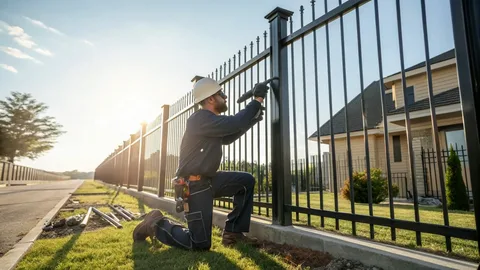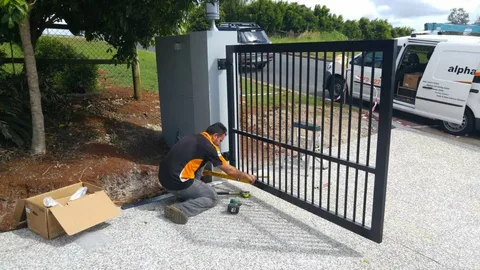
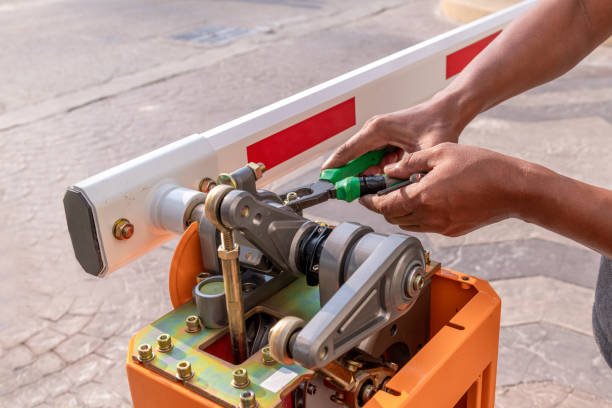
Sliding or swing gate giving you trouble? Here are the common repair mistakes to avoid in Pearland, TX — and what to do instead for lasting results.
Gate repairs sound simple on paper. Something stops working, you fix it, life moves on. But anyone who has owned an automatic gate for more than a few years knows it rarely plays out that way. A quick fix turns into a return visit. A part replacement reveals a bigger problem underneath. A DIY attempt ends with a gate that works worse than before.
Why does this happen so often? Most of the time, it comes down to a handful of common mistakes — mistakes that homeowners make, and mistakes that less experienced contractors make too. The good news is that once you know what to watch for, you can avoid every one of them.
JB Fences has handled hundreds of gate repairs across the Houston area, and we have seen the same errors repeat themselves more times than we can count. This article walks through what those errors are, why they cause problems, and what should happen instead. Whether you are planning to call a pro or attempt a small fix yourself, this will save you both money and frustration.
Mistake One: Ignoring Small Issues Until They Become Big Ones
This is the most common mistake we see, and it costs homeowners more money than any other. A slight grinding sound. A gate that takes a second longer to open. A remote that sometimes needs two presses. These small signals get brushed off as minor annoyances when they are actually early warnings.
A motor that is struggling against worn rollers will burn out months earlier than one running smoothly. A sensor that is slightly out of alignment will eventually trigger a stuck gate at the worst possible moment. A small amount of rust at a weld joint will keep growing until the gate structurally fails.
The math on early repair is straightforward. A $150 service call to address a small issue almost always beats the $800 emergency call when the same issue takes the whole system offline.
Mistake Two: Using the Wrong Lubricant
This sounds minor, but it causes more problems than people realize. Many homeowners reach for WD-40 because it is what they have in the garage. WD-40 works as a short-term fix, but it is actually a solvent, not a lubricant. It evaporates within days and can wash away the protective coating already on the hinges and tracks.
For long-term lubrication, you want a dedicated gate or hinge lubricant — usually a silicone-based or lithium grease product. These hold up against humidity, do not attract dirt, and last for months between applications.
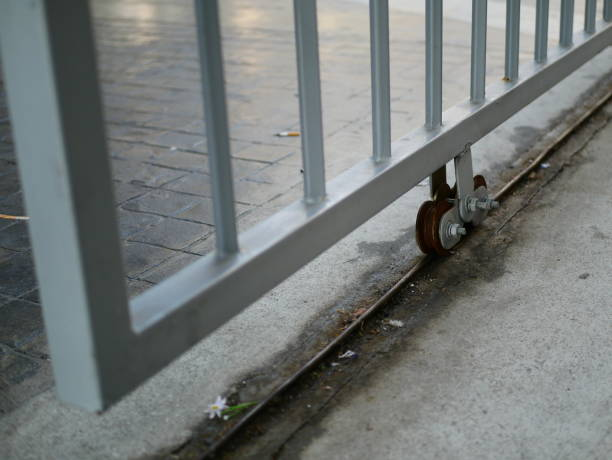
On sliding gates, the rollers and tracks need lubricants designed specifically for that motion. Using thick grease on a fast-moving roller can actually cause more friction over time as dirt sticks to it.
Mistake Three: Skipping the Safety Sensor Check
Safety sensors are the part of the gate system most often ignored during repair. Photo eyes, edge sensors, and auto-reverse mechanisms all need to work properly, and yet they get overlooked because they are not the part that is visibly broken.
Here is why this matters. Most local codes — including those in Pearland and surrounding Brazoria County — require that automatic gates have functioning safety mechanisms. A gate that closes on a car, a child, or a pet because the safety sensors were never tested is both a legal liability and a real-world danger.
Any reputable gate technician will test the safety sensors as part of every service call, even if you only called about a different problem. If your repair technician skips this step, that is a warning sign.
Mistake Four: Buying Replacement Parts Without Checking Compatibility
This one trips up homeowners who try to handle repairs themselves. Gate operators, remotes, control boards, and receivers all come in different frequencies, voltages, and protocols. A part that looks identical to your old one may not actually work with your system.
Older fixed-code remotes will not pair with modern rolling-code receivers. A 24-volt motor will not work with a 12-volt control board. Even within the same brand, parts from different model years are not always interchangeable.
Before buying any replacement part, take photos of the existing component, write down the model number, and check compatibility with your specific operator. A 15-minute phone call to the manufacturer or a knowledgeable parts supplier saves a costly mistake.
Here is a rough breakdown of average parts cost in the Pearland area, just to give you a sense of what is reasonable:
| Replacement Part | Typical Cost Range | Average Labor Time |
| Remote control | $30 – $80 | 15 minutes |
| Photo eye sensors | $80 – $200 | 30–60 minutes |
| Control board | $150 – $400 | 1–2 hours |
| Gate motor (residential) | $400 – $1,200 | 2–4 hours |
| Hinges (heavy-duty) | $50 – $150 each | 1–2 hours |
| Roller assemblies | $40 – $120 each | 30–60 minutes |
According to the Door and Access Systems Manufacturers Association, more than 60 percent of premature gate operator failures trace back to either improper part substitution or installation that did not match manufacturer specifications. The savings from picking a cheaper part rarely justify the early replacement that follows.
Mistake Five: Not Addressing Post and Foundation Issues
A lot of repair work focuses on the gate itself or the motor, while the actual problem is in the ground. Gate posts that have shifted, leaned, or settled cause the gate to bind, sag, and put strain on the operator.
In the Pearland area, soil shifts are a real factor. Clay-heavy soils expand and contract with moisture, which can move gate posts over time. Heavy rain followed by dry periods can cause posts to lean as the ground shifts around them.
A proper repair includes checking the posts. If the posts are leaning, no amount of motor adjustment will fix the underlying problem. Either the posts need to be reset, or the hinge alignment needs to be corrected to compensate.
Skipping this check is one of the most common reasons gates fail again within a few months of repair.
Mistake Six: Choosing a Repair Tech Based on Price Alone
When something breaks unexpectedly, the temptation is to go with whoever can come out fastest at the lowest price. We get it. But low-bid emergency repair is one of the most common ways to end up with a worse problem than you started with.
A reputable gate technician will spend time diagnosing the actual issue rather than guessing at parts to replace. They will explain what is wrong, what the repair will involve, and what it will cost — in writing, before any work starts.
A few warning signs of a low-quality repair service: vague pricing, pressure to make immediate decisions, no proof of license or insurance, reluctance to provide references, and a refusal to put estimates in writing.
For the Pearland area, our team handles Expert Sliding and swing gate repair in Pearland, TX with written estimates, licensed technicians, and a clear explanation of what we are doing and why before any work begins. That is the standard you should look for from any company you hire.
Mistake Seven: Forgetting About Power Surges and Lightning
Gulf Coast weather is hard on electronics. Thunderstorms roll through the Pearland area regularly, and power surges from nearby lightning strikes are a common cause of gate operator failure.
A lot of gate control boards get fried by surges that the homeowner did not even realize happened. The first sign is usually a gate that suddenly will not respond to remotes, even though everything looked fine the day before.
Installing a surge protector on the gate operator’s power line is one of the cheapest preventive measures available — typically $30 to $80 in parts plus a quick installation. We recommend this for every gate system in this region.
A 2023 study by the Insurance Institute for Business and Home Safety found that electrical surge damage accounts for nearly a quarter of all storm-related residential claims in Gulf Coast states. Gates are not specifically tracked in that data, but they fall into the same vulnerable category as other outdoor electronics.
Mistake Eight: Not Keeping Maintenance Records
This sounds bureaucratic, but it matters. When you do not track what has been repaired, when, and by whom, you end up paying for the same diagnostic work multiple times. A technician who shows up to a system they have never seen has to start from scratch.
A simple notebook in the garage, or a notes app on your phone, listing each service date, what was done, and what parts were replaced — that is enough. When a future issue comes up, you have a record to reference, and any contractor can pick up the history without having to guess.
This also helps with warranty claims. Most gate operator warranties require proof of professional installation and ongoing service. Without records, warranty coverage can be denied even on legitimate failures.
Final Thoughts
Gate repair seems like a small thing until something goes wrong at the wrong moment. The mistakes covered above are the most common reasons repair work fails or ends up costing more than it should. Catching small issues early, using the right parts and lubricants, checking posts and safety sensors, picking a qualified technician, and keeping basic records — these are the habits that keep an automatic gate system reliable for the long haul. None of them require special skills. They just require paying attention.
Our team handles Best Automatic gate motor replacement in Pearland, TX along with full system inspections and routine maintenance. If your gate is acting up, or you just want a professional set of eyes to catch issues before they become problems, reach out. We are happy to walk through your options and give you straight answers about what your specific system needs.
Frequently Asked Questions
How quickly should a gate repair issue be addressed?
Small issues like odd sounds or slight delays should be looked at within a few weeks. They do not require an emergency call, but waiting months almost always makes the problem worse. A gate that has fully stopped working or is stuck open is a same-day priority — both for security reasons and to prevent additional damage from forced operation. The longer mechanical strain continues, the more expensive the eventual repair becomes.
Can I run my automatic gate manually if the motor fails?
Yes, every residential gate operator includes a manual release mechanism. This is a required safety feature so you can open and close the gate by hand during a power outage or motor failure. The release is usually a key-operated lever near the motor housing. Learn where yours is and how to use it before you actually need it. Practice the release a few times so it is not your first try during an emergency.
Why does my gate work fine sometimes and fail other times?
Intermittent issues are usually one of three things: weak batteries in the remote or backup system, sensors that are dirty or misaligned, or a connection that is loose somewhere in the wiring. Heat and humidity can make intermittent problems worse because metal expands and contacts can lose connection. A thorough inspection by a technician is the only way to identify intermittent issues accurately, since they often will not show up during a quick visit.
How long should a gate repair last?
A proper repair using quality parts should last several years, depending on what was fixed. Motor replacements typically come with one- to three-year warranties. Sensor replacements should hold up for five years or longer. If you find yourself calling for repeated repairs on the same component, the underlying issue likely was not fully diagnosed — and the cheapest path forward may actually be replacing the operator entirely rather than continuing to patch it.
Is it worth repairing a gate that is more than 15 years old?
Sometimes, but not always. Modern gate operators are quieter, more reliable, and include features like phone app integration and better safety sensors that older systems just do not have. If a major component on an older system fails, weigh the repair cost against the cost of upgrading the whole operator. As a general rule, when repairs reach 60 percent of the cost of a new system, full replacement gives you a better return — both in reliability and in the years of service you get before the next major repair.