
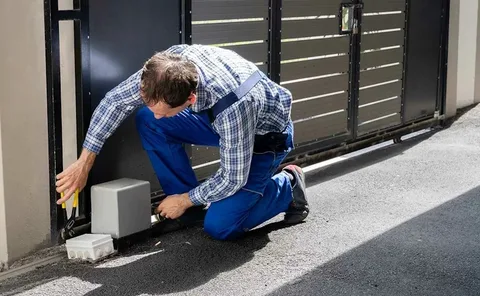
Learn how automatic gate installation in Pearland, TX improves property access, security, convenience, and long-term gate performance.
An automatic gate can improve how homeowners and businesses control access to driveways, parking areas, private entrances, and secured property. However, reliable operation depends on much more than attaching a motor to an existing gate. JB Fences provides fencing, automatic gate, welding, carport, and custom metal services for residential and commercial properties throughout the Houston area. A properly planned automatic gate needs the right gate style, opening method, structural support, operator, power source, access controls, and safety components. Property owners in Pearland, Humble, and surrounding communities should also consider driveway width, available opening space, daily traffic, gate weight, and long-term maintenance before installation begins. When these factors are evaluated together, the finished system can provide smoother entry and more dependable operation. This guide explains automatic gate types, installation planning, access-control options, common problems, maintenance, and what property owners should discuss before scheduling professional service.
Why Automatic Gate Planning Matters
An automatic gate combines a moving gate structure with electrical and mechanical components. Each part needs to work with the others.
Controlled Property Access
Automatic gates allow property owners to control vehicle or pedestrian entry without manually opening and closing the gate each time.
Depending on the system, access may be managed through remote controls, keypads, or other compatible entry devices.
This can be useful for private homes, apartment entrances, commercial parking areas, warehouses, offices, and other properties where controlled access is important.
Convenience for Daily Use
A manually operated driveway gate may become inconvenient when it is opened several times each day.
Automation allows the gate to open and close through a powered operator, reducing the need to leave the vehicle every time someone enters or exits.
Professional automatic gate installation can include custom metal gates, pedestrian gates, automatic openers, remote systems, and keypad-access options based on the property’s needs.
Choosing Between Sliding and Swing Gates
The available space around the entrance has a major influence on which gate style makes sense.
Sliding Gates
A sliding gate moves horizontally along the fence line or entrance.
This configuration can work well when there is enough side clearance for the gate panel to move fully away from the driveway opening.
Sliding systems may also be considered where a swinging panel would interfere with vehicles or use too much driveway space.
The gate structure, track or support system, operator placement, and opening distance should all be considered during planning.
Swing Gates
Swing gates open inward or outward around hinged posts or columns.
They can create a traditional appearance and may work well on properties with sufficient clear space around the entrance.
The installation should account for gate weight, hinge strength, driveway slope, opening direction, nearby obstacles, and the amount of room required for the panel to travel safely.
Important Parts of an Automatic Gate System
Reliable operation depends on more than the visible gate panel.
Gate Operator
The operator provides the mechanical force used to open and close the gate.
The correct operator depends on the gate style, weight, length, frequency of use, and other system requirements.
A unit that is poorly matched to the gate may struggle during operation and experience unnecessary wear.
Access Controls
Automatic gates can work with several types of access control.
Remote controls may be convenient for homeowners, while keypads can allow entry through a code. Some systems may support other compatible access methods depending on the equipment selected.
The best option depends on who needs access and how frequently visitors, employees, contractors, or delivery drivers enter the property.
Safety Components
Because automatic gates move under mechanical power, safety devices are an important part of the installation.
The system should be configured according to the gate operator manufacturer’s requirements and applicable installation standards.
Safety components should also be tested during installation and checked as part of future maintenance.
How Professional Automatic Gate Installation Works
The process should begin with the property rather than with a preselected gate motor.
Site Evaluation
The installer can review driveway width, fence alignment, available side space, existing gate posts, electrical access, ground conditions, and the intended gate opening direction.
If an existing gate will be automated, its structural condition should also be checked.
A gate that sags, binds, or has weak posts may need mechanical or structural corrections before automation is added.
Gate and Operator Selection
The gate style and operator should be selected together.
A heavy custom metal gate may require a different system from a smaller residential entrance.
Daily opening cycles should also be considered because a commercial property may place much greater operating demand on a gate than a typical residential driveway.
Installation and Testing
After the gate and operator are installed, alignment, opening travel, closing travel, access controls, and safety functions should be tested.
The gate should move smoothly without excessive resistance or unusual noise.
Automatic Gate Installation in Pearland, TX
Property entrances in Pearland can vary from residential driveways to commercial access points, so automatic gate planning should reflect how the specific property is used.
Property owners looking for automatic gate installation in Pearland, TX should first decide whether the primary goal is vehicle control, privacy, convenience, security, appearance, or a combination of these needs.
Residential Driveway Gates
Homeowners may choose automatic gates to control vehicle access and create a more defined property entrance.
The gate style should complement the existing fence, driveway, and exterior design.
Space for vehicles waiting at the entrance should also be considered so the gate can open without interfering with traffic or parked vehicles.
Commercial Gate Systems
Commercial properties may need automatic gates for employee parking, storage areas, service entrances, or restricted sections.
These systems may operate more frequently than residential gates, making operator selection and access-control planning especially important.
Businesses should also consider how visitors, deliveries, and after-hours access will be managed.
Automatic Gate Services in Humble, TX
JB Fences also supports fencing and custom ironwork for properties in Humble, making the area suitable for gate and entrance projects that combine metalwork with access control.
Homeowners and businesses considering automatic gate services in Humble, TX should evaluate the physical gate and automation system as one project.
Custom Metal Gate Options
Custom metal gates can be designed around the width of the entrance, desired appearance, and existing fencing.
Decorative details can affect gate weight, so the final design should be coordinated with hinge, post, and operator requirements.
A gate that looks appropriate but is too heavy for its supporting components can create operational problems.
Existing Gate Automation
Some property owners may already have a manual gate they want to automate.
Before adding a motor, the gate should open and close smoothly by hand. Misalignment, damaged hinges, weak posts, or structural movement should be corrected first.
Automation should not be used to force a poorly functioning gate to move.
Common Automatic Gate Problems
Even a properly installed gate can develop problems over time as components wear or alignment changes.
Gate Will Not Open or Close
A gate that stops operating may have an issue involving power, controls, sensors, operator components, or physical obstruction.
The first step is identifying whether the problem is electrical, mechanical, or structural.
Repeatedly activating a gate that is visibly stuck can place additional strain on the system.
Uneven or Jerky Movement
A gate should normally move in a controlled manner.
Jerking, binding, scraping, or uneven travel may indicate alignment issues, track problems, hinge wear, obstruction, or operator strain.
These symptoms should be investigated before they develop into larger problems.
Remote or Keypad Problems
Sometimes the gate itself is functioning correctly while the access-control device is not communicating properly.
Remote batteries, programming, keypad condition, wiring, or control components may need evaluation.
Maintaining an Automatic Gate System
Automatic gates combine outdoor metalwork with moving and electrical components, so periodic observation is useful.
Keep the Gate Path Clear
Remove objects, branches, stones, or debris that interfere with the movement of a sliding or swing gate.
Sliding systems may require additional attention around the gate’s travel path.
Watch for Structural Changes
Look for sagging, loose hardware, damaged hinges, movement around posts, or changes in alignment.
These conditions can increase resistance and make the operator work harder than necessary.
Pay Attention to New Sounds
Grinding, scraping, clicking, or unusually loud motor operation can indicate a developing problem.
A change in sound is often easier to address when investigated early rather than after the gate stops moving.
Choosing an Automatic Gate Installer
Property owners should understand how the gate will be designed and operated before installation starts.
Discuss How the Gate Will Be Used
Explain how many vehicles use the entrance, how often the gate will operate, and who needs access.
A residential driveway and a busy commercial entrance may require different equipment.
Ask About the Full System
Discuss the gate structure, operator, access controls, electrical requirements, safety components, and final testing.
Treating these as one system helps reduce compatibility problems.
Plan for Future Service
Ask how routine maintenance should be handled and what symptoms should prompt inspection.
Knowing where controls, emergency release features, and major components are located can also make future service easier.
Conclusion
Automatic gate installation can improve controlled access, convenience, security, and the appearance of residential and commercial entrances. Reliable performance, however, depends on choosing the correct gate style, operator, support structure, access controls, and safety components for the property.
For property owners in Pearland and Humble, planning should begin with driveway layout, gate dimensions, available opening space, daily usage, and existing fencing or metalwork. Sliding and swing gates each have different space and structural requirements, so the right choice depends on the actual site.
A gate should also move smoothly before automation is added. Proper installation, careful testing, and attention to alignment, hardware, controls, and unusual operating changes can help keep the system functioning as intended.
Frequently Asked Questions
What is the difference between a sliding gate and a swing gate?
A sliding gate moves sideways along the entrance, while a swing gate rotates on hinges. Available space, driveway layout, gate weight, and property design help determine which option is more suitable.
Can an existing manual gate be converted to an automatic gate?
Sometimes. The existing gate, hinges, posts, alignment, and structural condition should be inspected first. A gate that does not move smoothly may need repair before an automatic operator is installed.
What access-control options can be used with automatic gates?
Depending on the system, options may include remote controls, keypads, and other compatible entry devices. The best choice depends on how residents, employees, visitors, and service providers need to access the property.
Why is my automatic gate moving slowly or unevenly?
Slow or uneven movement may result from alignment problems, damaged hardware, track issues, obstruction, operator problems, or structural changes. The full system should be checked to identify the cause.
Do automatic gates require regular maintenance?
Yes. Gate alignment, moving hardware, access controls, safety devices, operator performance, and the travel path should be checked periodically for developing problems.
What should I consider before installing an automatic driveway gate?
Consider driveway width, available opening space, gate style, daily traffic, gate weight, electrical access, access-control needs, safety requirements, and the condition of existing fence posts or supports.